Visit to Ramallah, Tel Aviv and Jerusalem, 1-6 June 2026
Between 1–6 June 2026, Oliver and Jordan travelled to Tel Aviv, Jerusalem and Ramallah to meet political, religious and business leaders and discuss developments across Israel and Palestine.
Israeli Politics and Society
They met with senior Members of the Knesset (MKs), political and religious advisers from Yesh Atid, Shas, Hadash and Likud. In addition, they met members of the newly formed Yashar! with Eisenkot party, a centrist Israeli political party founded by Gadi Eisenkot. They also met senior rabbis linked to the Sephardic Jewish and National Religious communities in Israel.
Discussions focused on domestic and regional political trends ahead of the upcoming Israeli elections, as well as Israeli attitudes towards the conflicts in Lebanon, Iran and Gaza. Topics included coalition-building and political negotiations ahead of the elections; the partnership between Naftali Bennett and Yair Lapid; the real possibility of Prime Minister Benjamin Netanyahu returning to power; the evolving relationship between Israel and the United States; and the challenges facing cooperation between Palestinian and Arab-Israeli political parties.
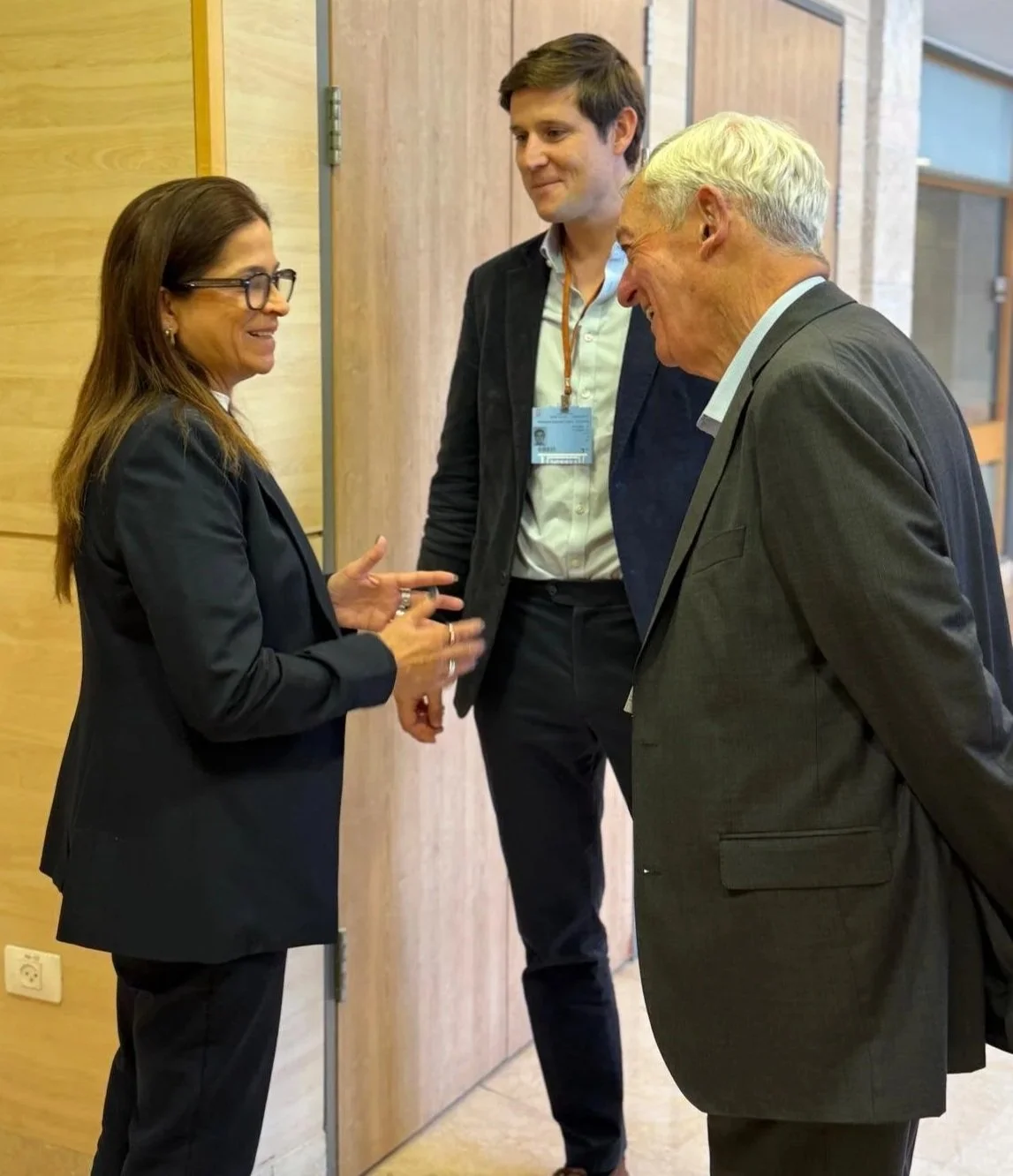
Meeting in Knesset with MK Meirav Ben Ari.
They also met senior rabbis who described the deep societal fissures emerging in Israel as a consequence of the ongoing conflicts. Marriages and family life are under strain due to prolonged military service, while public sentiment has shifted significantly since 7 October. The long-term societal trauma was compared to that experienced during other protracted conflicts, including the Vietnam War. Increasing numbers of young people from the National Religious community, particularly women, are choosing combat roles and extended military service, reflecting significant shifts in communal norms and expectations.
Several interlocutors argued that the influence of the Jewish diaspora on Israeli political and social debates has declined in recent years. One senior Israeli ethicist suggested that, as National Religious and nationalist perspectives have become more influential, there has been a reduced emphasis on issues such as religious pluralism and the peace process, alongside a greater focus on sovereignty, security, territorial questions and Jewish statehood. According to this view, Israeli decision-making is becoming less constrained by external Jewish diaspora opinion as Israel shifts rightwards.
Another theme was the “either with us or against us” framework that has developed across Israeli society. This could become politically and morally limiting if applied indefinitely. It is a trend that risks erasing distinctions, reducing complex realities to opposing camps, and making dialogue focused on ending conflict much more difficult.
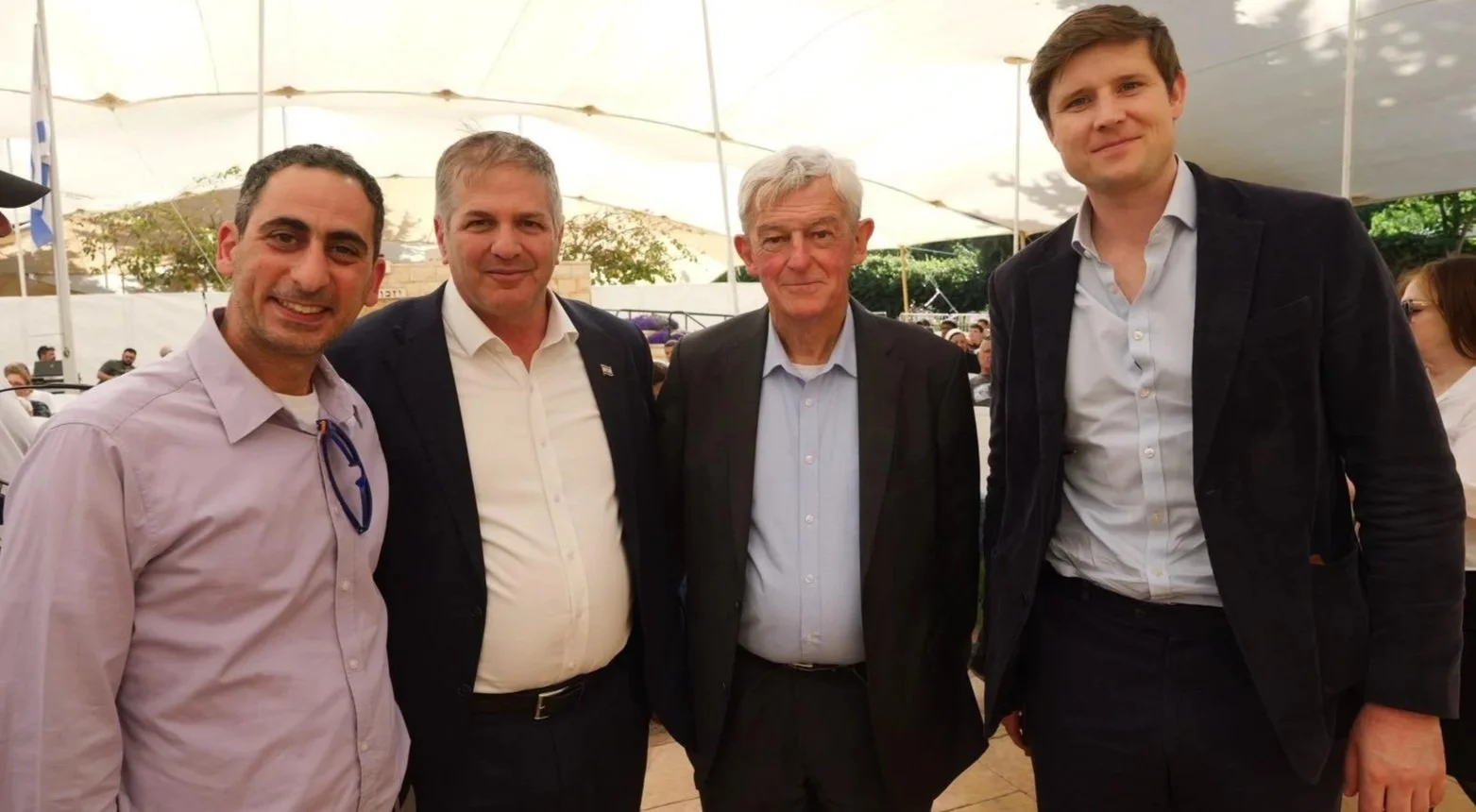
Meeting with Ariel Morali, Deputy Director of Jabotinsky Institute, and Education Minister Yoav Kisch.
Humanitarian Issues and Gaza
They travelled to the CMCC in Kiryat Gat to better understand ongoing humanitarian efforts in Gaza and the challenges associated with securing access for vital, life-saving aid. In addition, they discussed the current efforts of High Commissioner Nikolay Mladenov and the National Committee for the Administration of Gaza.
They were also invited to attend an event addressed by Prime Minister Netanyahu and attended by Education Minister Yoav Kisch (Likud). The event commemorated the sinking of the Altalena and provided important insights into contemporary attitudes within Likud.
Economic Developments
In Tel Aviv, they met senior Israeli business leaders from the high-tech sector. In Jerusalem, they met senior Palestinian business leaders. Discussions focused on the challenges facing Israeli businesses due to labour shortages caused by restrictions on Palestinian workers entering Israel and the mobilisation of Israeli reservists. Despite increasing war-related costs, participants noted that the Israeli economy has remained resilient, with the shekel remaining comparatively strong.
Conversely, Palestinian business and political leaders expressed serious concerns that ongoing restrictions implemented by Finance Minister Bezalel Smotrich affecting correspondent banking arrangements with the Israeli banking sector, combined with the Palestinian Authority’s fiscal crisis and the continued withholding of Palestinian revenues, are creating conditions that could trigger a broader financial collapse across the West Bank.
Palestinian Politics
Finally, they travelled to Ramallah to meet a senior Palestinian minister. Discussions covered the situation in the West Bank, the results of the recent Fatah Congress elections, current efforts to develop a new Palestinian constitution, forthcoming Palestinian Legislative Council (PLC) elections, and prospects for Palestinian unity.
It was emphasised that, for a sustainable peace to emerge, Palestinians must focus on a genuinely national approach rather than party-specific political campaigns. Participants highlighted the importance of strengthening national institutions, improving governance, and fostering greater political cohesion in order to address the significant challenges facing Palestinian society.
The visit provided valuable insights into the political, social and economic dynamics shaping Israel and the Palestinian territories at a time of significant regional uncertainty. Discussions highlighted both the immediate challenges posed by ongoing conflicts and the longer-term questions surrounding governance, societal cohesion, economic resilience and prospects for peace.