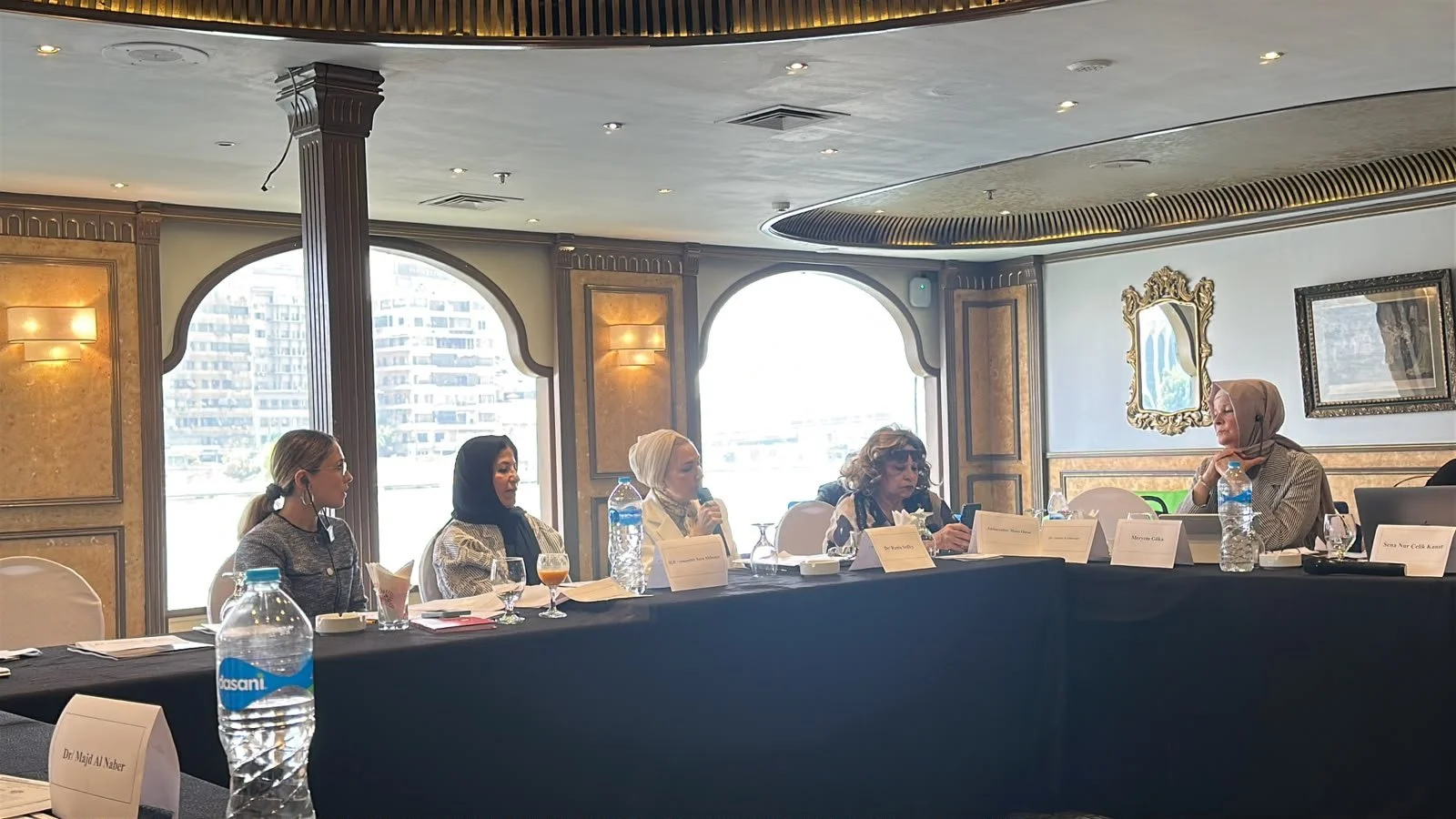
WSF Meeting in Cairo– Cross-Regional Policy Responses to Gender-Based Violence and Strengthening Social Cohesion in West Asia, 9 June 2026
On 9 June, members of the Women for a Sustainable Future (WSF) Network convened in Cairo to identify policies, legislative approaches, and practical strategies to address gender-based violence (GBV), strengthen social cohesion, and protect women and vulnerable communities amid conflict. The meeting convened parliamentarians, senior diplomats, former foreign ministers, government advisers, civil society leaders, gender and sustainability experts, and representatives from the Women Development Organization of the Organization of Islamic Cooperation (OIC) and UN Women. The two-day roundtable was organised by Forward Thinking in partnership with the SHAF Center for Future Studies and Crisis Analysis.
Conflict across West Asia and North Africa (WANA) is driving unprecedented levels of displacement, GBV, and social fragmentation. Against this backdrop, and amid growing global backsliding on women's rights and gender equality, the meeting was convened to ensure these priorities remain central to international diplomacy, national policymaking, and post-conflict recovery.
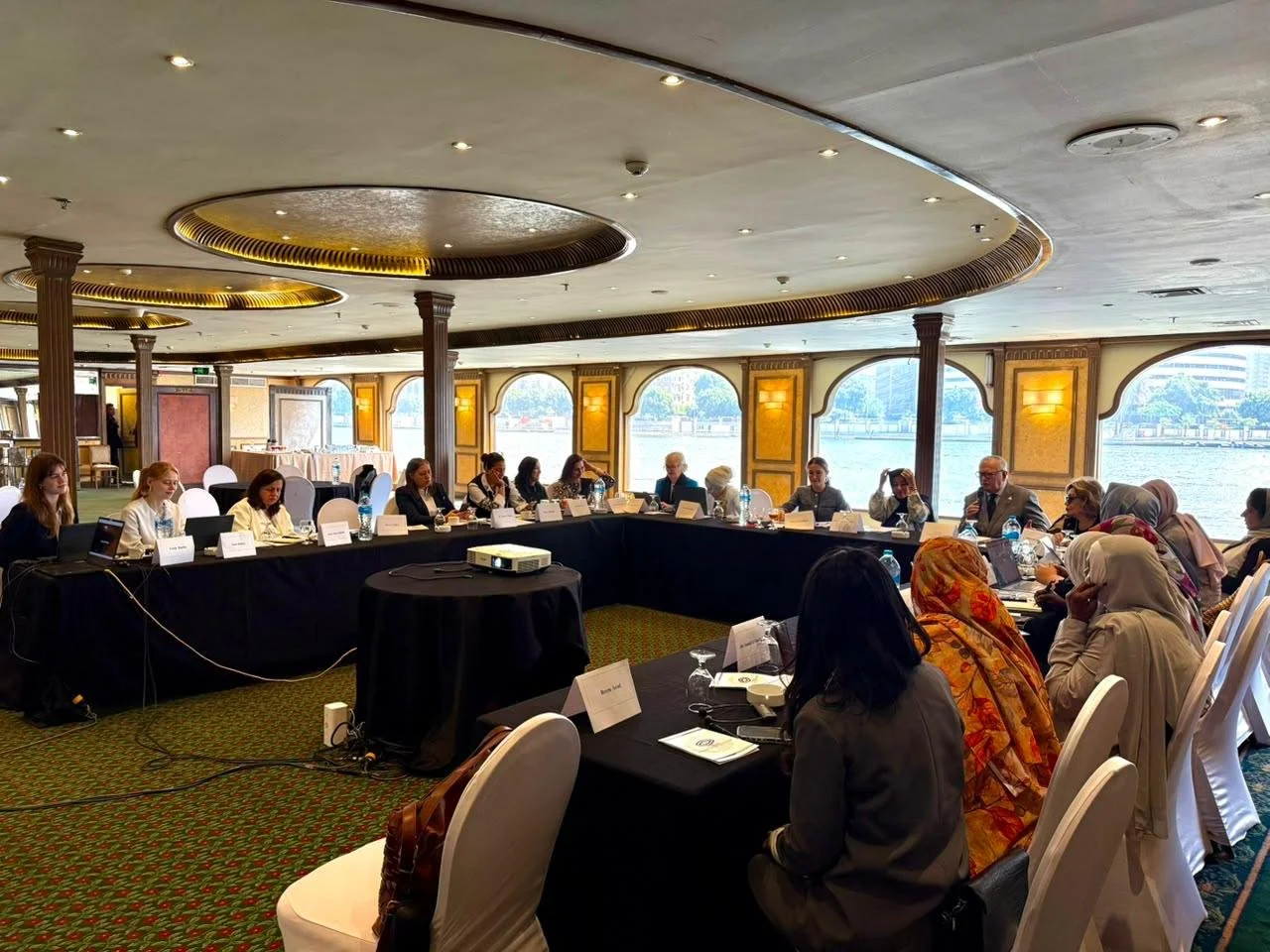
Roundtable 1 - Discussion with Sudanese Women Civil Society Leaders: Urgent Action Is Needed to Stop the War and Humanitarian Crisis in Sudan
The opening session was convened to connect Sudanese women leaders directly with decision-makers from across Europe and the WANA region, recognising that despite bearing the brunt of the conflict and leading humanitarian response efforts to sustain communities, Sudanese women remain largely excluded from international policymaking and peace processes.
Participants heard first-hand testimony on the scale of the crisis, including widespread conflict-related sexual violence, severe restrictions on humanitarian access, and the near collapse of education and healthcare services. Speakers highlighted that women and children account for the overwhelming majority of those displaced by the conflict and warned that entire generations are being denied access to education while communities face acute food insecurity.
Key Recommendations:
Strengthen Accountability for Conflict-Related Sexual Violence
Improve the documentation and preservation of evidence relating to sexual violence and other war crimes in Sudan to support accountability processes and international justice mechanisms.
Protect Women's Rights and Maintain International Commitments
Counter global backsliding on women's rights by amplifying Sudanese women's voices on international platforms, strengthening the Women, Peace and Security agenda, and sustaining political and financial commitments to women-focused programmes.
Expand Survivor-Centred Health and Psychosocial Services
Develop integrated health responses for survivors of GBV, including one-stop support centres, access to emergency healthcare and psychosocial services, virtual counselling, and specialist training for frontline Sudanese health professionals in conflict-affected settings.
Roundtable 2- Social Cohesion: Confronting the Long-Term Drivers of Instability
The second roundtable examined regional social cohesion challenges, drawing particular lessons from Lebanon while identifying parallels with developments in Sudan, Syria, Jordan, and elsewhere.
Participants stressed that current tensions cannot be separated from decades of unresolved conflict, institutional weaknesses, sectarian governance structures, displacement, and entrenched impunity.
Discussions explored how hate speech, misinformation, forced displacement, economic hardship, environmental degradation, and competition over scarce resources are increasingly undermining trust between communities. Women frequently shoulder the greatest social and economic burdens amid conflict and political instability, while also playing a vital role in rebuilding trust within fractured societies.
Key recommendations:
Strengthen Women's Leadership in Peacebuilding and Decision-Making
Ensure women are meaningfully represented in peace negotiations, reconstruction efforts, and political decision-making, recognising that inclusive processes are more likely to produce sustainable and lasting peace.
Counter Hate Speech and Protect Social Cohesion
Strengthen the monitoring, documentation, and sanctioning of hate speech and hate crimes, while promoting responsible political discourse and preventing the instrumentalisation of religion, migration, and identity for political gain.
Promote Religious Tolerance and Inclusive Dialogue
Invest in cross-community dialogue and initiatives that foster mutual respect, challenge discrimination, and strengthen social cohesion, recognising religious tolerance and inclusion as essential foundations for peaceful and resilient societies.
Roundtable 3 - Gender-Based Violence: Moving Beyond Legislation
The third session focused on legislative and policy responses to GBV, with participants sharing comparative experiences from Pakistan, United Kingdom, Jordan, Egypt, Türkiye, and Lebanon. While legal reforms have delivered important progress in several countries, participants agreed that legislation alone cannot eliminate violence against women. Effective implementation, survivor-centred services, prevention strategies, and broader societal change are equally necessary.
Key Recommendations:
Adopt a Whole-of-Society Approach to Preventing GBV
Complement legislative reform with prevention strategies that engage men and boys, challenge harmful social norms, expand economic opportunities for women, and promote education and public awareness.
Strengthen Survivor-Centred Protection and Access to Justice
Improve implementation of GBV legislation by expanding access to justice, psychosocial support, legal aid, shelters, and survivor-centred services, ensuring that protection extends to all women, including refugees and marginalised groups.
Address Emerging Forms of Digital and AI-Enabled Violence
Develop robust legal and policy frameworks to tackle cyber violence, online harassment, and artificial intelligence-enabled abuse, while strengthening cooperation between governments, technology companies, and civil society to make digital spaces safer for women and girls.
Improve Evidence-Based Policymaking and Regional Learning
Strengthen data collection, comparative legal analysis, and the exchange of best practices across countries to support more effective and responsive policies for preventing and addressing GBV.
Looking Ahead
The conference concluded with a discussion on the future priorities of the WSF Network and opportunities for continued cross-regional collaboration.
Participants agreed on the importance of the WSF network in maintaining regular dialogue between parliamentarians, policymakers, academics, and grassroots leaders to facilitate policy exchange and strengthen cross-regional cooperation. They also emphasised the need to amplify the voices of women from conflict-affected contexts, expand partnerships with women-led organisations, support comparative legal and policy research, and improve documentation of violations to strengthen accountability.
The meeting reinforced a central message running throughout all roundtables: protecting women and strengthening social cohesion cannot be treated as secondary concerns during conflict. Rather, they are essential preconditions for achieving sustainable peace, resilience, and long-term regional stability.